
Invoices typed by hand
Hundreds of paper invoices a month, copied one by one into Excel.
AI agents for businesses
I study your business the way I have for almost 7 years with companies at NOVA SBE, find the repetitive work and put AI agents on it, inside a system built around you.
You get the prototype within a week at most. No commitment.
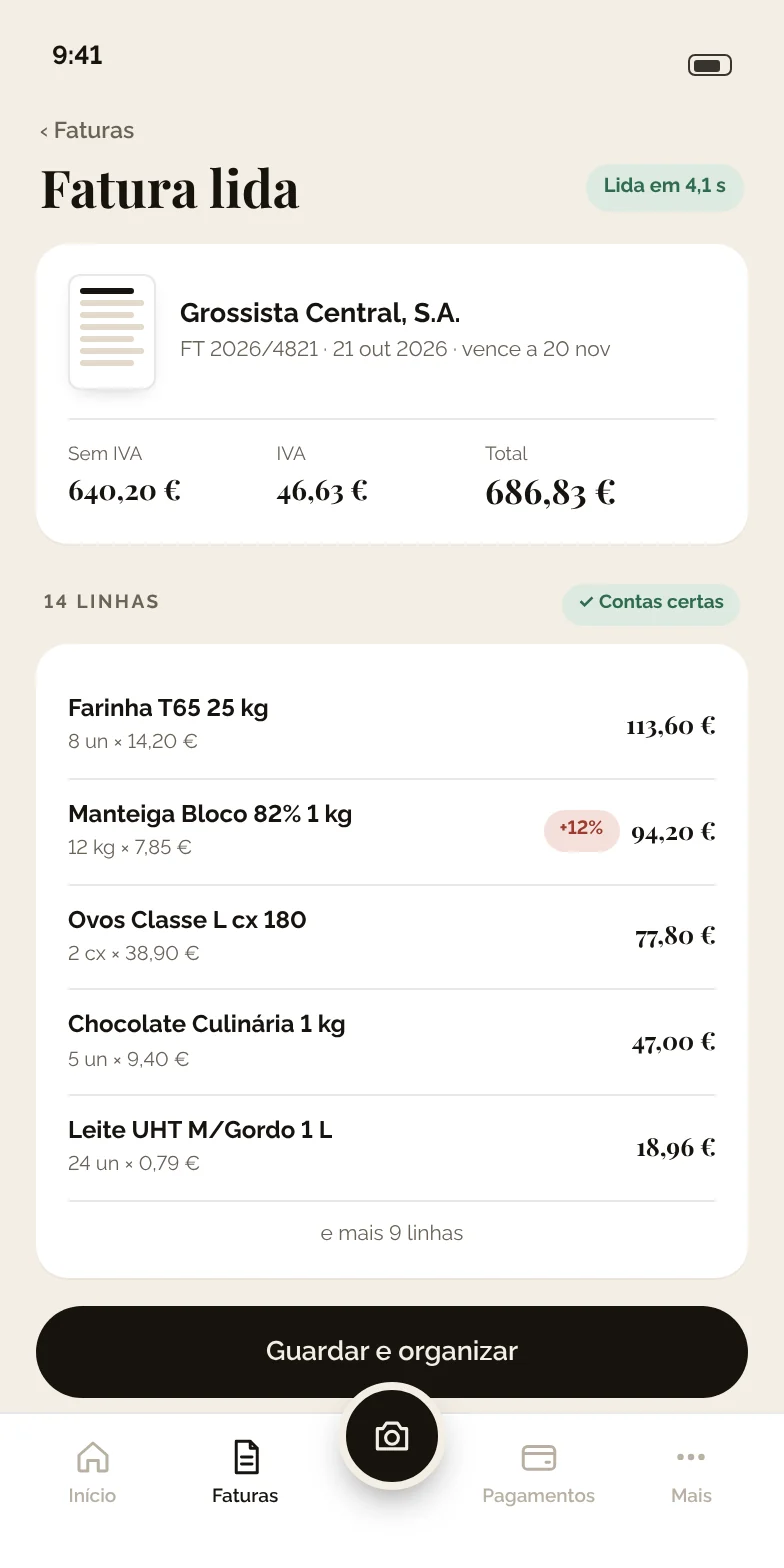
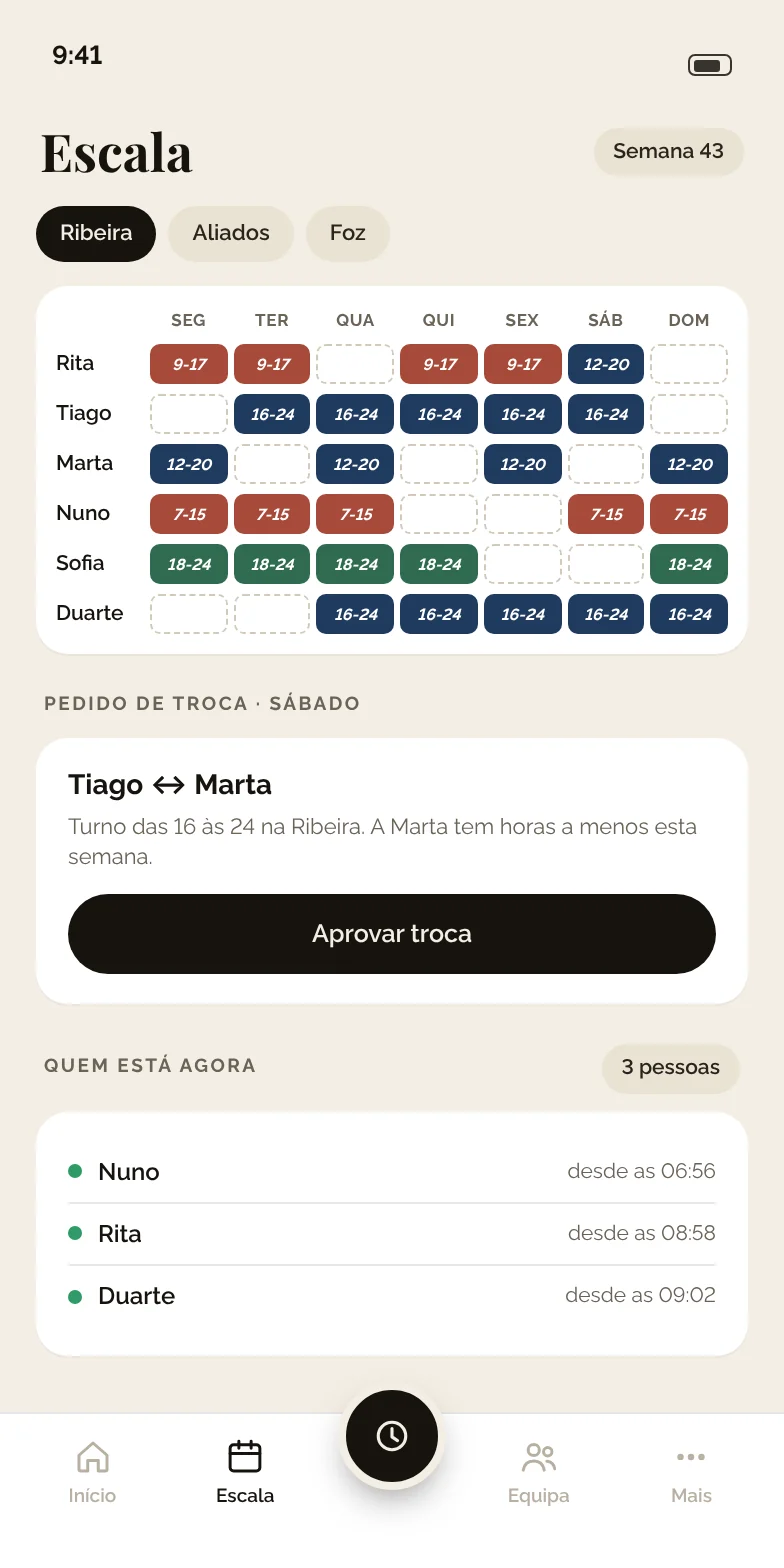
I'd rather talk firstSee a day with agents at work →Three example screens: a supplier invoice read by AI, a restaurant's weekly rota and an assistant answering questions about the business.
Almost 7 years as a mentor and trainer at NOVA SBE, analysing businesses across industries, one of the top 20 business schools in Europe.
Financial Times, European Business Schools ranking 2025: 17th place
Before that, three years in product and innovation at Santander. In banking and at NOVA SBE, I have worked with teams from companies like these:








Daily operations leave no time to change, and the software on offer was rarely designed for that particular business. AI, which could take this work off people's hands, has barely reached small and mid-sized companies.
of companies in Portugal use artificial intelligence.
Fonte: INE, 2025among companies with 10 to 49 people.
Fonte: INE, 2025is the European Union average.
Fonte: Eurostat, 2025Hundreds of paper invoices a month, copied one by one into Excel.
Spreadsheets, emails and endless WhatsApp threads. What matters gets lost along the way.
Paper schedules, shift swaps agreed by text message and hours counted at the end of the month.
Nobody is quite sure whether the order arrived, who signed for it or what is running out.
Managers don't have the business figures at hand. They ask, often the accountant, and wait hours or days.
Five subscriptions, five logins, five versions of the truth. And none designed for that business.
That is how most of the businesses I talk to work. The information exists, but it is scattered, out of date and always depends on someone to pull it together. The system I build brings it into one place and puts AI to work on it.
Rather than adding one more app to the pile, I build a single platform designed around the way your business works. Inside it, AI agents take care of the repetitive work: they read documents, watch the numbers, prepare tasks and answer questions. It starts with the problem that hurts most and grows one module at a time.
Invoices, delivery notes and statements. AI pulls the data from every line and someone on the team just checks it.
Prices, margins, deadlines and hours. When something drifts from normal, you hear about it in time to act.
Payment reminders, orders, progress updates for clients. It is all written and waiting for your go-ahead.
Ask in plain words, the way you would ask your accountant. The answer comes in seconds, with today's numbers.
It follows your processes, names and rules, with the details generic software ignores.
Designed for a phone and for people with little time. If it needs a manual, it is badly made.
The agents read, compare and prepare. Deciding, sending and paying is always done by a person.
Four small steps. You only go on to the next one if the previous one made sense for your business.
You tell me how an ordinary week goes in your business.
A list of the tasks an agent can take on, ranked by impact in hours and in money.
Within a week at most, with your names, documents and rules.
The agent works alongside whoever already does the task. You only move to the subscription if it makes a difference.
The first one shows a whole day with agents, at a made-up business. The others grew out of the problems of specific businesses. They show what is possible. They are not off-the-shelf products.
 Agentsexample
Invoices, orders, prices, absences and payments handled by agents, with a person deciding what matters.
Where the person comes in: four decisions in a whole day. Everything else gets done without waiting for anyone.
See the agents at workTEMPOClocking in on the phone, rotas and shift swaps, temperatures, checklists and cash-up, across the group's different locations.
Where AI comes in: a monthly summary that tells the manager what changed and where money is being lost.
See TEMPOMore examples: Formosa, Prumo, Fecho and Ronda.
The next system will be designed around your business.
I start with the people who do the work, without losing sight of the business numbers. From the first conversation to a system in daily use, with the same person throughout.
I spend time in the business, next to the people doing the work. Before talking about software, I watch how the day goes.
Together we pick the problem that weighs most: on people, in time and patience, and on the business, in money.
I design the solution with the people who will use it: what comes first, what can wait and how it fits the routine.
Early on, not at the end, there is a prototype with your names, your rules and real examples to try.
The team uses it in real situations. What does not work changes, what works stays.
The prototype becomes a system, built with AI tools and much faster than traditional development. Then I stay close, and the listening starts again.

I'm Gonçalo. For almost 7 years I have worked with NOVA SBE as a mentor and trainer, analysing businesses across industries: business models, pricing models, customer development and product testing. Before that, I spent three years at Santander, finishing as a cards product manager and in an innovation team.
Today I combine that experience with AI-assisted development. The person who understands the problem is the person who builds the solution, so nothing gets lost in between.
Before putting an agent to work, I do what I have done for years at NOVA SBE: I work out how the business makes money, where time is lost and what is worth automating first. An agent in the wrong place is just one more tool.


Introduce me. The referral programme gives a discount to whoever recommends a business: tell me who it is and I will explain how it works.
A few details are enough to start. I reply personally and we work out together whether there is something worth building.
Follow what I am building on Instagram.