 TEMPOexample
Rotas, clock-in and the restaurant's day-to-day. No paper.
TEMPO brings a restaurant's team, shifts and operations into one system, and shows the manager what is happening at each location without having to ask anyone.
For: restaurant groups with several locations, shifts and large teams.
This is an example. It was built for one specific restaurant, with its own rules. In another business, the system is designed from scratch around that business.
The problem
The business grew. Management stayed on paper.
Shift swaps agreed by text message, temperatures noted in a notebook, hours added up by hand at the end of the month. The manager spends the day putting out fires: someone called in sick and the rota needs redoing, there are 37 messages from the team, the till still needs counting.
And the business's progress is always left for tomorrow.
Clock in, build the rota, close the day. All in one place.
Where you see AI, artificial intelligence does the work; a person just checks it.
Clock in on the phone
In and out with one tap, with the day's shift in front of you. It keeps the legal record of working time, ready to export as PDF or CSV.
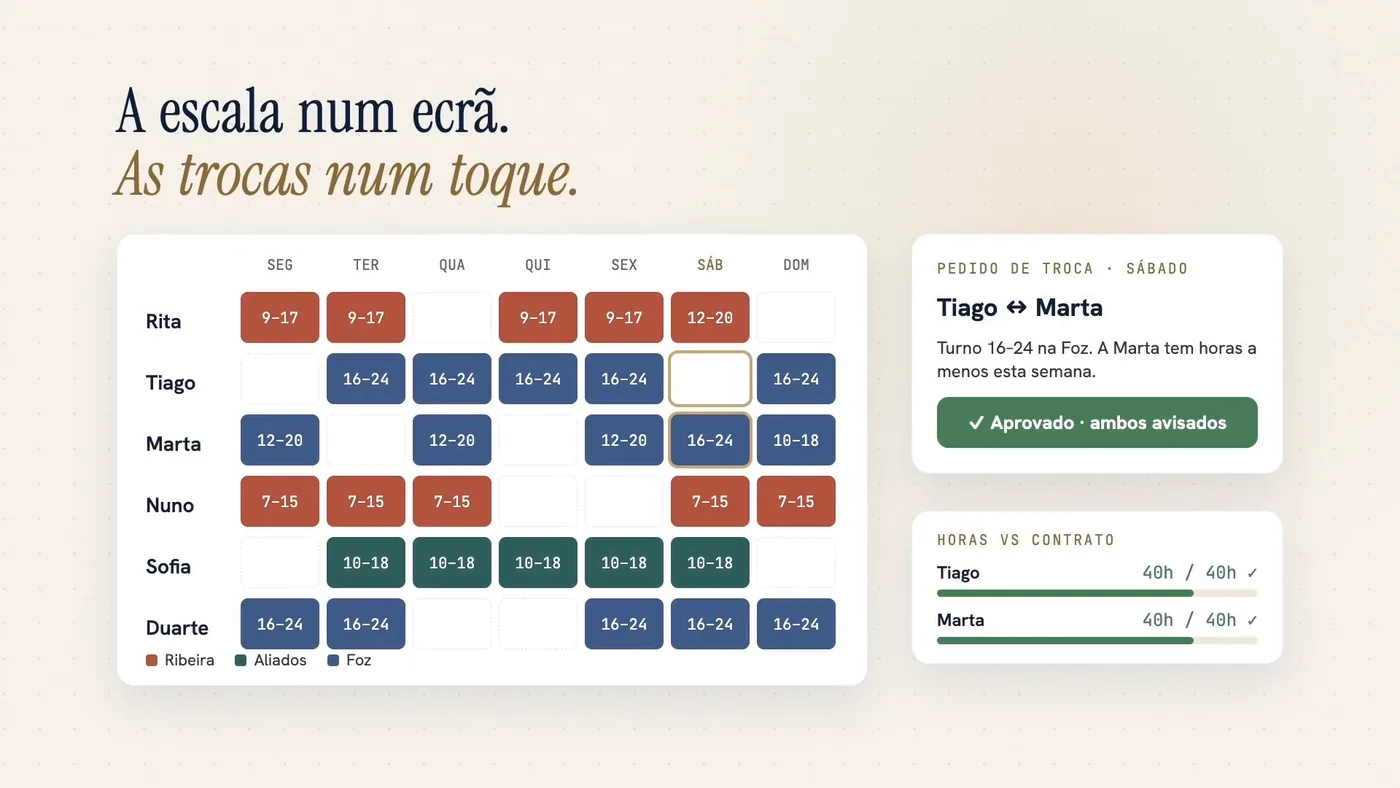
The rota on one screen, swaps in one tap
Who works where and when, across the locations. A swap request goes to the manager, who approves it, and both people are notified.
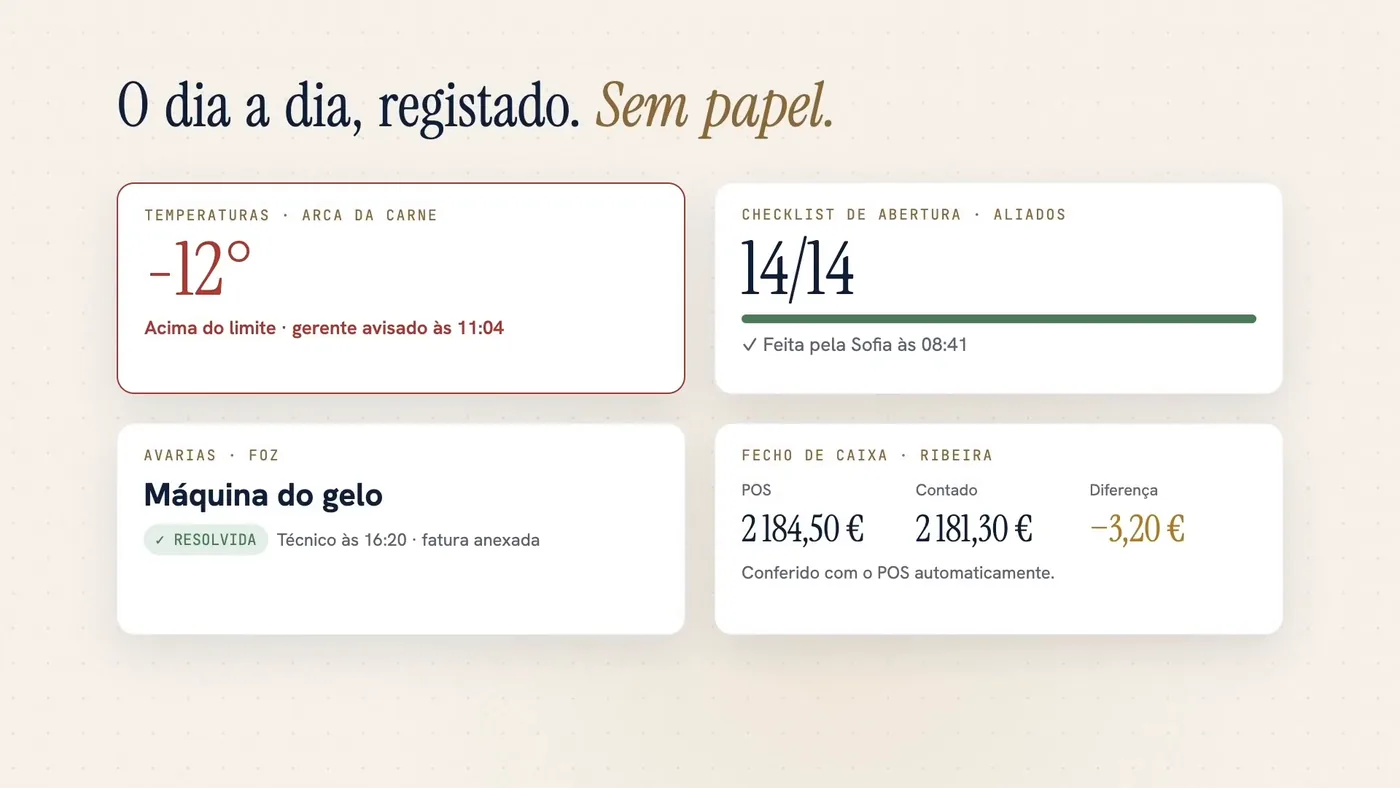
The day-to-day recorded, no paper
Temperatures, opening checklists, breakdowns and cash-up. When a temperature goes out of range, the manager is told straight away.
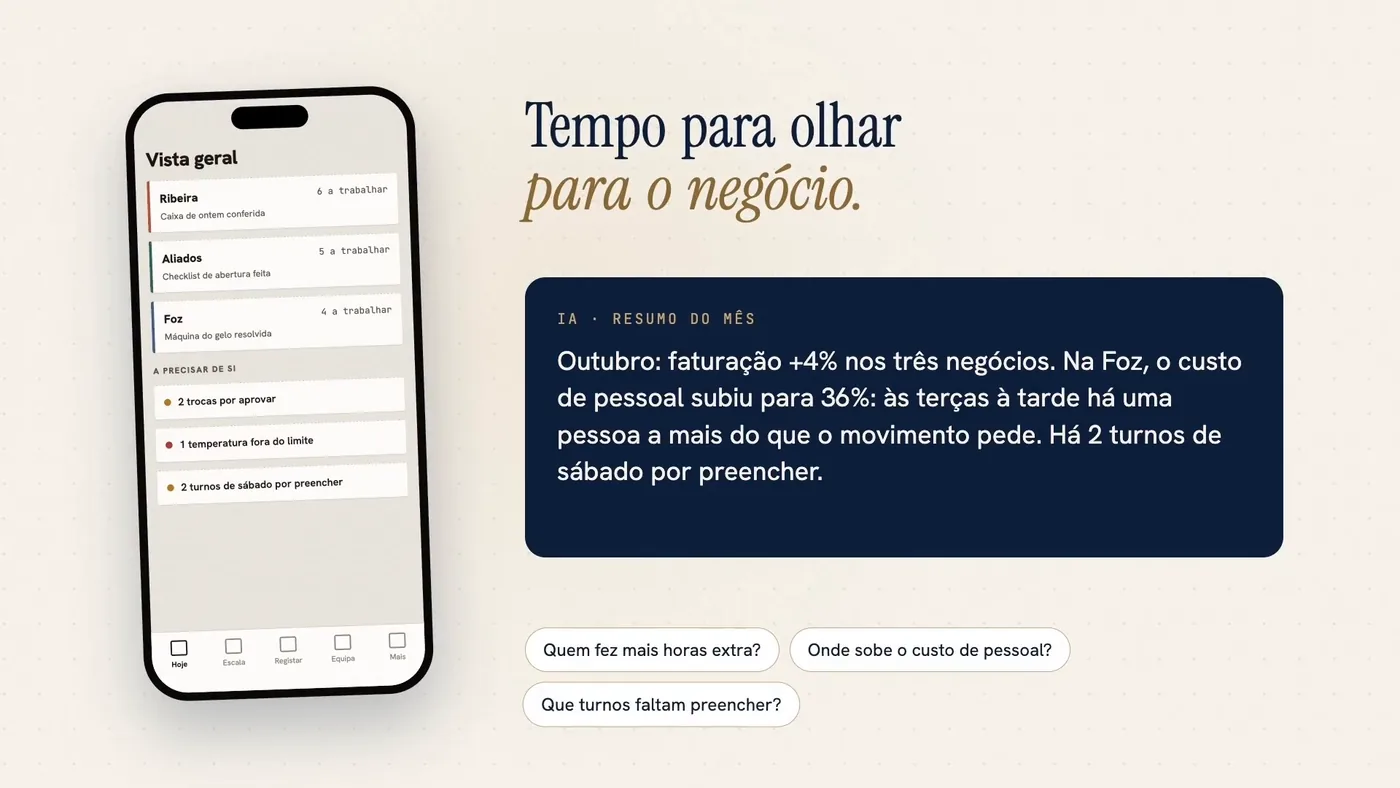
Several locations, one view
Revenue, hours worked and staff cost for each location, compared with the previous month.
A monthly summary written by AI
AI reads the numbers and says what matters: at Foz, staff cost rose to 36% and on Tuesday afternoons there is one person more than the footfall needs. It also answers questions, like who did the most overtime.
The agents in this example
- Team agentabsences, shift swaps and hours
- Alerts agentcold-room temperatures
- Assistantthe monthly summary
What it looks like
Stills from the teaser. Names, companies and amounts are fictitious.
Other examples
Different problems, the same way of working.


Facing the same problems in your day-to-day?
Your operation may look nothing like this one. That is why the system is designed around it.